How to record a cash payment from a client in Canada
Cash may be king, but it doesn’t do its own bookkeeping.
Unlike an e-transfer or credit card payment, physical cash does not automatically appear on your business bank statement.
If you deposit cash, you need to do two things:
Record the payment when you receive the cash
Record the bank deposit separately.
How you record the payment depends on whether or not you’ve made an invoice for the work yet.
Have an invoice? Record the cash to the invoice.
No invoice and the work is complete? Record the cash as a sale.
Why does the difference matter?
It matters because recording the payment incorrectly can make one sale look like two. Keep reading to learn how to avoid this mistake.
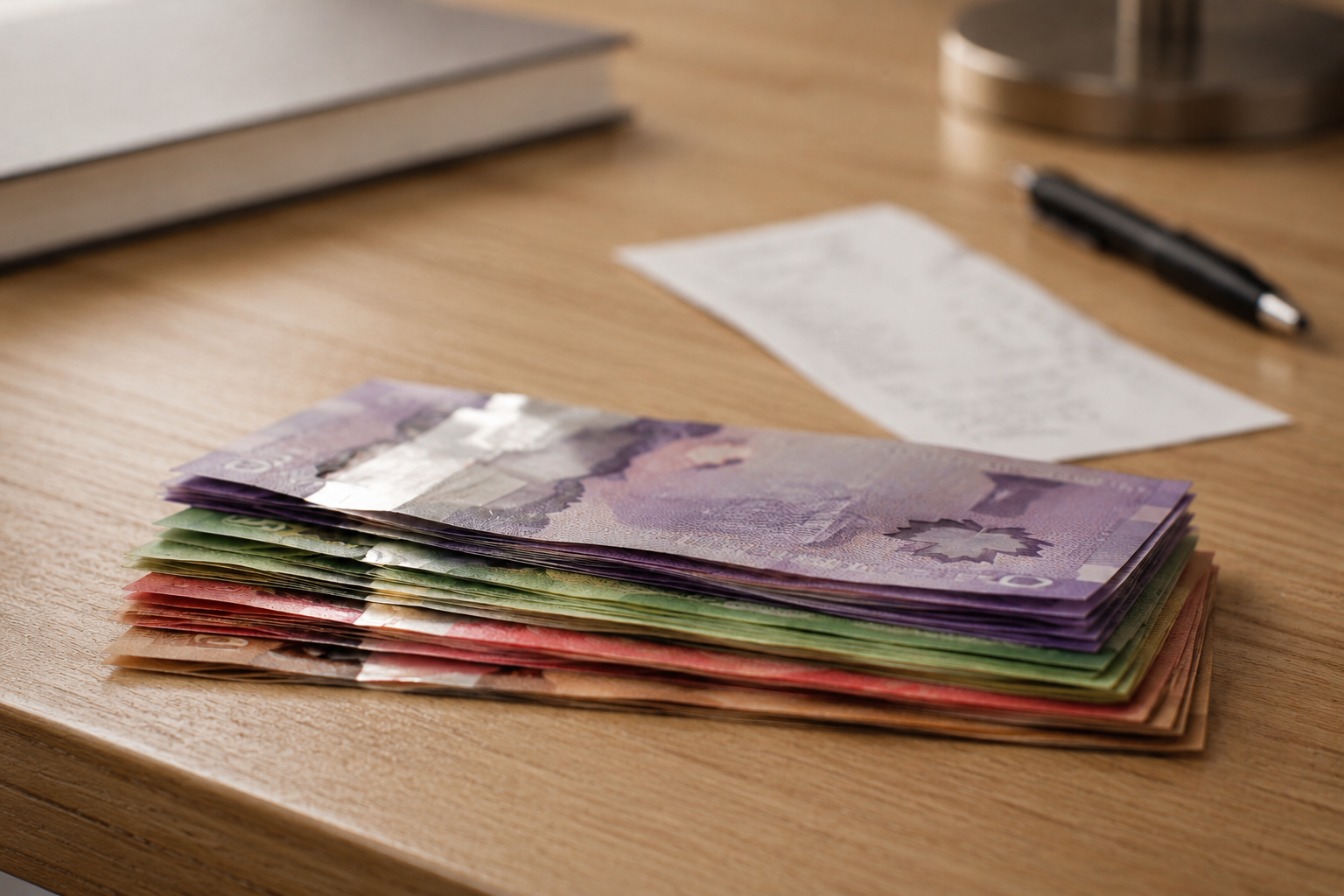
Tutoring was one of those ways you could make a little money in high school. You helped a kid with math, their parent handed you cash and that was that.
A cash payment from a client can still feel pretty informal. Your books, however, need to tell the whole story.
Have you already recorded the sale?
Has the client now paid you?
Is the money still in your hands, or have you deposited it?
The answers determine what you record next.
So remember this tip: When you get cash in exchange for your services, start by asking if you’ve already created an invoice for the service.
You see, when you create an invoice in your bookkeeping records, you’re recording both the sale and the amount your client owes.
Then, when your client hands you the cash, apply that payment to the invoice.
This shows that the invoice has been paid. And don’t record another sale at that point.
How to record a cash payment when you already have an invoice
Let’s say you sent your client this invoice:
Invoice
Toronto Design Studio
123 King St. W., Toronto, ON
GST/HST registration number:
123456789 RT0001
Bill to:
Arcade Narcisse Leblanc
| Description | Amount |
|---|---|
| Website design services | $100 |
| Ontario HST (13%) | $13 |
| Total due | $113 |
This example assumes you’re registered for GST/HST and sold a taxable service in Ontario.
When you entered the invoice in your books, the sale was recorded like this:
| Account | Debit | Credit |
|---|---|---|
| Accounts receivable | $113 | — |
| Service revenue | — | $100 |
| HST payable | — | $13 |
Accounts receivable shows that your client owes you $113.
Service revenue shows the $100 you earned.
HST payable tracks the $13 you charged on the invoice.
Now your client hands you $113 in cash.
Apply the payment to the invoice and record the cash in cash on hand or undeposited funds:
| Account | Debit | Credit |
|---|---|---|
| Cash on hand or undeposited funds | $113 | — |
| Accounts receivable | — | $113 |
Your books now show two things:
You have the cash, and
Your client no longer owes you anything
Notice what the entry does not include: service revenue.
You already recorded the revenue when you entered the invoice. So, recording another sale when your client pays would count the same income twice.
What is undeposited funds?
Undeposited funds is a temporary place to hold payments you’ve received but haven’t deposited into your bank account yet.
It lets your books follow the money:
Before your client pays, the money is in accounts receivable
After your client pays, the money is in cash on hand or undeposited funds
After you make the deposit, the money is in your business bank account
This account is especially useful when you combine several cash payments into one bank deposit.
The amount recorded in your books can then match the amount that appears on your bank statement.
If you deposit the cash immediately, your bookkeeping software may let you record the payment directly to your bank account.
How to record the bank deposit
When you deposit the $113, record the money moving into your business bank account:
| Account | Debit | Credit |
|---|---|---|
| Business bank account | $113 | — |
| Cash on hand or undeposited funds | — | $113 |
The deposit is not another sale. It is the same $113 moving from your hands into the bank.
How to record a cash payment when there is no invoice
Sometimes a client pays as soon as you provide the service.
If you haven’t already recorded the sale through an invoice, record the sale and the cash payment together:
| Account | Debit | Credit |
|---|---|---|
| Cash on hand or undeposited funds | $113 | — |
| Service revenue | — | $100 |
| HST payable | — | $13 |
This entry records the $100 sale, the $13 of HST collected and the $113 of cash you received.
If you later deposit the cash, record the deposit separately:
| Account | Debit | Credit |
|---|---|---|
| Business bank account | $113 | — |
| Cash on hand or undeposited funds | — | $113 |
Again, the bank deposit is not another sale.
How to avoid recording the same cash payment twice
Before recording a cash payment, ask: Has this sale already been recorded through an invoice?
If the answer is yes, apply the payment to the invoice.
If the answer is no and the work is complete, record the payment as a sale.
When you deposit the cash, record it moving from cash on hand or undeposited funds into your bank account.
The mistake happens when you record the invoice as revenue and then categorize the bank deposit as revenue too. One $100 sale then appears as $200 of revenue in your books.
What records should you keep for a cash payment?
Cash does not create the automatic trail you get from an e-transfer, credit card payment or bank deposit.
Your records should show:
Who paid you
The date you received the cash
The amount received
What the payment was for
The related invoice, if there is one
Whether GST/HST was charged
What happened to the cash afterward
The CRA says your income records must show the date, amount and source of the income. Your entries should also be supported by documents such as invoices, receipts and bank deposit slips.
Give your client a receipt and keep a copy for your records.
If the cash paid invoice 1042 in full, the receipt could say:
Received $113 in cash from Client Name on August 26, 2026, as payment of invoice 1042. Balance remaining: $0.
Mark the invoice as paid so your records connect the sale to the cash you received.
Does paying in cash change the GST/HST?
No. The payment method does not determine whether GST/HST applies.
If you’re registered for GST/HST and sell a taxable service, separate the tax you collect from your revenue.
In the example above, $100 is service revenue and $13 is HST payable.
Receiving the invoice payment later does not create another $13 of HST. The tax was already recorded with the invoice.
GST/HST can generally become payable when you receive payment or when the payment becomes due, whichever happens first.
Is being paid in cash the same as using cash accounting?
No. Receiving physical cash and using the cash method of accounting are two different things.
Most self-employed people and businesses report business income using the accrual method. Under this method, you generally record income when you earn it, even if your client pays later.
The income-tax cash method is generally available only to farmers, fishers and self-employed commission sales agents.
You can read the CRA’s explanation of the accrual and cash methods. Accepting a cash payment does not turn your business into a cash-method business.
Rules to remember
If you already recorded the sale through an invoice, apply the cash payment to the invoice.
If you haven’t recorded the sale and the work is complete, record the cash payment as a sale.
If you deposit the money, record it moving from cash on hand or undeposited funds into your business bank account.
Follow these rules so your books show where the money came from, where it went and that only one sale is recorded.
Want to make sure every cash payment is accounted for in your books?
Keep your books current with a fixed-price monthly bookkeeping package—month to month, cancel any time before your next billing date.